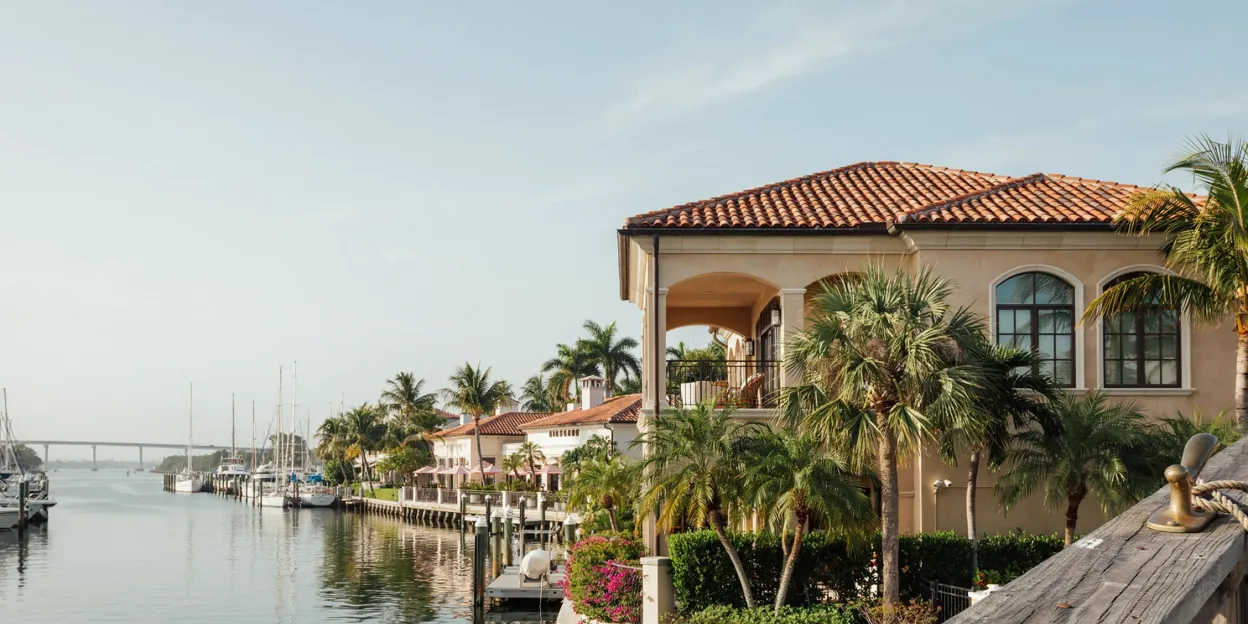
Canaveral Groves is the rural area west of Port St. John, between the Beachline and the back side of the Port St. John grid, reached by Pine Street, Coconut Avenue, and Adamson Road. It was platted as grove and ranch lots, and a lot of it is still dirt roads, acreage, and homes set well back from the street. The housing is a mix: 1970s and 1980s block homes on the paved roads, manufactured homes, and newer custom homes on the larger parcels, under shingle on the older houses and metal on many of the newer ones.
The ground is low and the water table is high, so heavy rain sits, and the flash flood warnings that cover Port St. John usually name Canaveral Groves too. That matters for roofs mostly at the edges: a house that gets water around it gets moisture under its eaves and in its attic. Canaveral Groves is unincorporated, so the permit is a county permit.
This site connects Canaveral Groves homeowners with an independent local roofing contractor by phone. It does not perform the work.
A metal roof on a newer home with a leak at a skylight or a wall is a roof repair. A 1980s shingle roof on a paved-road block home with an insurer letter is a roof inspection first. A house with a barn or a workshop that both need roofs is a metal roofing conversation, and the outbuildings should be on the call from the start.
Permits go through Brevard County, and the contractor should confirm the road is passable for a material delivery before the job is scheduled. Say whether the address is on a paved county road or a private drive when you call.
Call (321) 490-0701 to be connected with a local roofing contractor serving Canaveral Groves.
A lifted shingle, a rusted valley, a split pipe boot, or a drip that shows up with every afternoon storm, traced to its source and fixed.
Tear-off to the deck, plank boards checked and replaced where soft, new underlayment, and a new roof permitted through the city or Brevard County.
Tarping, photos, and repair after wind off the lagoon, a fallen oak, or a named storm crossing the Space Coast opens the roof.
A walk on the roof and a look in the attic, written up with photos for a renewal letter, a home sale, or a check before June 1.
Standing-seam and exposed-fastener metal for riverfront, rural, and outbuilding roofs, specified for salt air off the Indian River.
The state wind-mitigation inspection form, and the deck nailing, straps, and secondary water barrier that earn credits on it during a reroof.
Reroofing 1960s space-boom homes: plank decking, low-slope hips, flat sections, and the code upgrades the permit requires.
What to photograph, what a contractor's written scope gives the adjuster, and how Florida's roof-claim rules work after a storm.